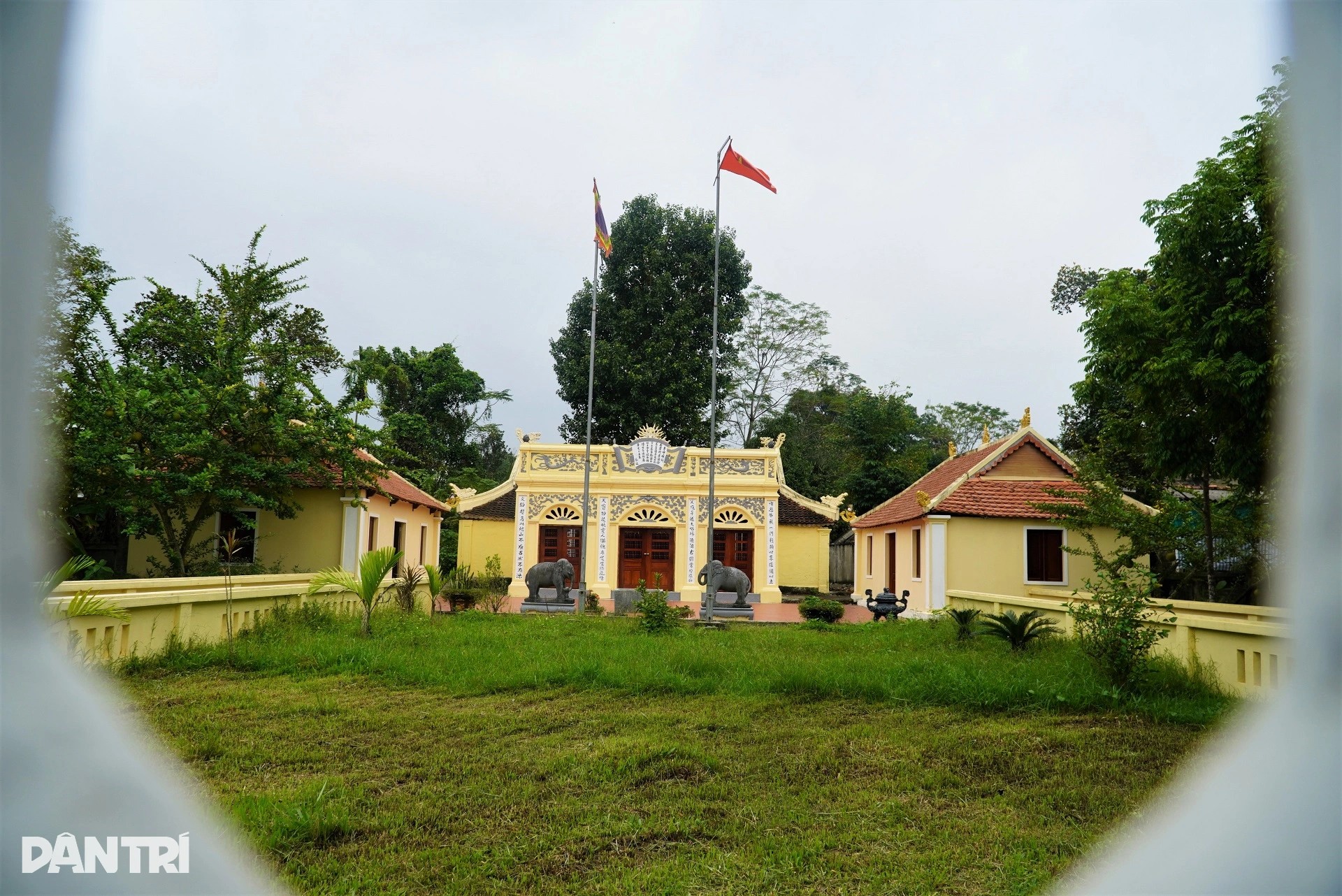
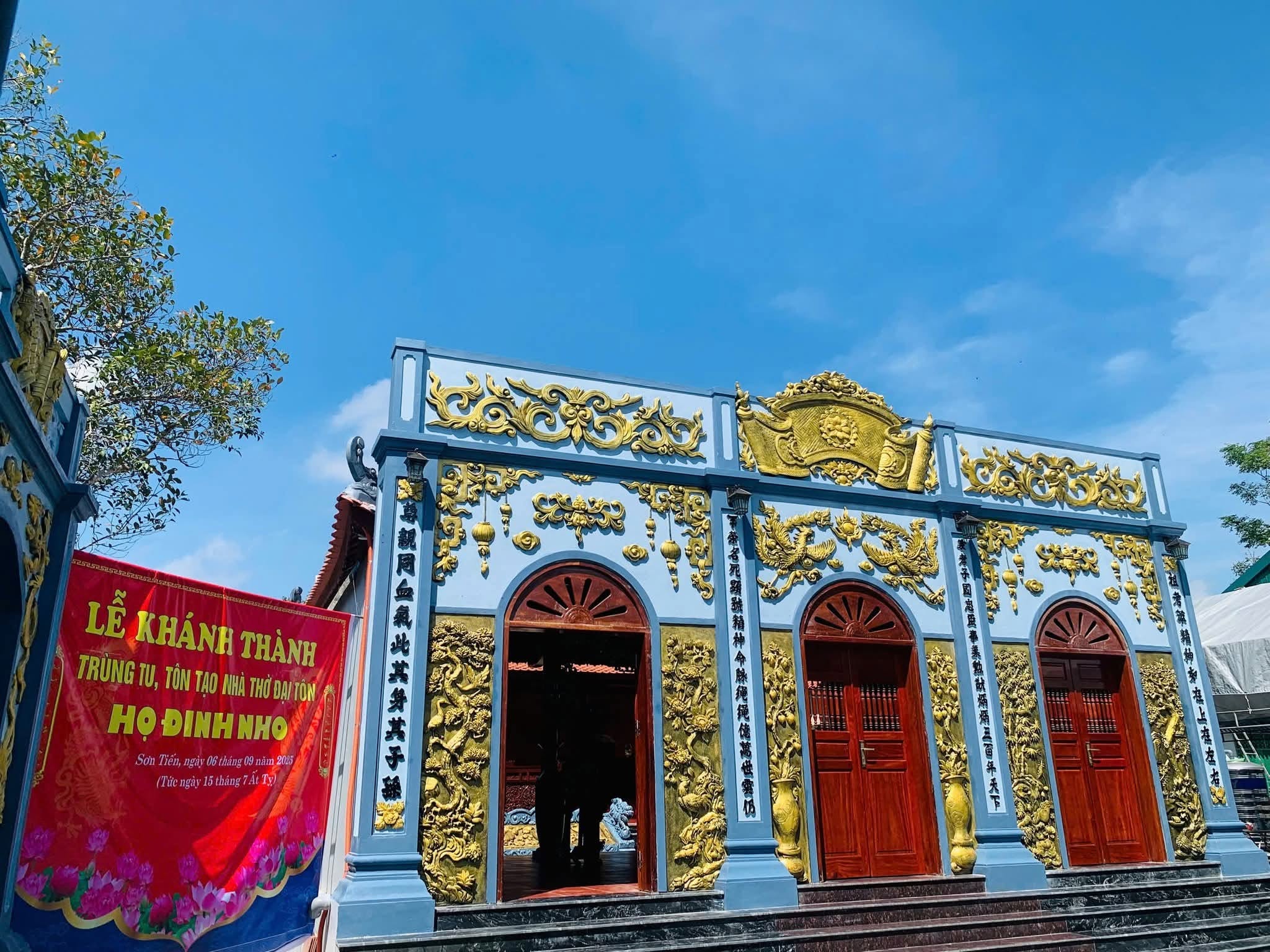
Spiritual Heritage
What the Đinh Nho lineage passes down from generation to generation — beyond names and dates.
繼世登科
Kế thế đăng khoa · Generation after generation, passing the examinations without interruption
Empires fall, borders dissolve, and stelae eventually erode in the wind. If the Đinh Nho lineage has traversed five centuries, it is not by clinging to the stones of its tombs — it is by cultivating something that neither time, nor exile, nor wars can erase.
Twenty generations. Scholars and farmers, mandarins and weavers, poets and mothers who crossed rivers under bombs. All carried this name. What follows is for all of them.
Study as compass
In 1715, on the eve of a journey of no return, Đinh Nho Hoàn engraved four characters in the memory of his descendants: 繼世登科 — Kế thế đăng khoa. It was not an injunction to succeed. It was an invitation never to stop learning.
Yesterday, this flame lit the path of the mandarin examinations. Today, it burns in lecture halls, workshops, kitchens where gestures are passed down, and evening conversations where a parent explains the world to a child. Study, for us, is not a race for titles: it is the most serious way of taking life seriously.
Integrity in small things
Knowledge without conscience is but ruin. The history of our clan is marked by moments where ethics took precedence over comfort.
There are the brilliant gestures: Đinh Nho Điển choosing death over collaboration, Phan Thị Viên whose faithfulness traversed the centuries into divinity. But there are also, countless and without witnesses, the ordinary gestures: keeping one's word, not cheating one's neighbour, not abandoning one's family in times of crisis. These figures are not engraved on stelae. They are just as real. The heritage of integrity does not belong only to scholars.
Memory as shelter
When the road to Beijing grew too long, when the prison walls smothered hope, when exile made the homeland unreachable — our ancestors always found the same refuge: writing.
But memory is not only the poetry of scholars. It is also the story told in the evening to one's children, the photos kept in a shoebox, the name spoken aloud so it does not disappear. The memory of those who did not write matters as much as that of those who left books.
Discipline in service of all
This thirst for understanding found its most unexpected expression in the spiritual quest. In forsaking power for the saffron robe, Thích Minh Châu did not break with our Confucian tradition: he turned it back toward its foundation — serving.
In translating alone, over decades, the immensity of the Buddhist Canon, he proved that the same discipline of the mind that forged mandarins could also lead to universal compassion. Success was not the goal. Service was.
Do your best — the only measure that counts
Looking at the figures of this lineage can be daunting. A Hoàng giáp engraved at the Temple of Literature, an ambassador, a translator of the Pali Canon, graduates of Cambridge and Harvard — the list is long and brilliant. But here is what history teaches, if one reads it carefully: none of these ancestors was born at the top.
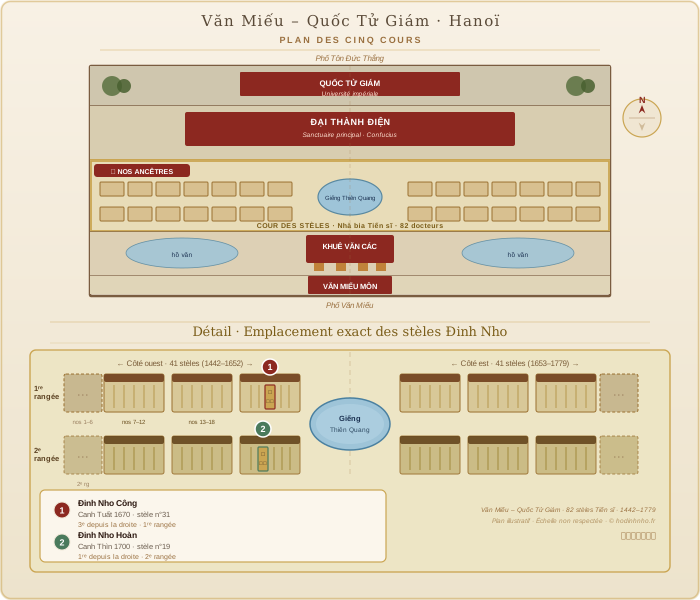
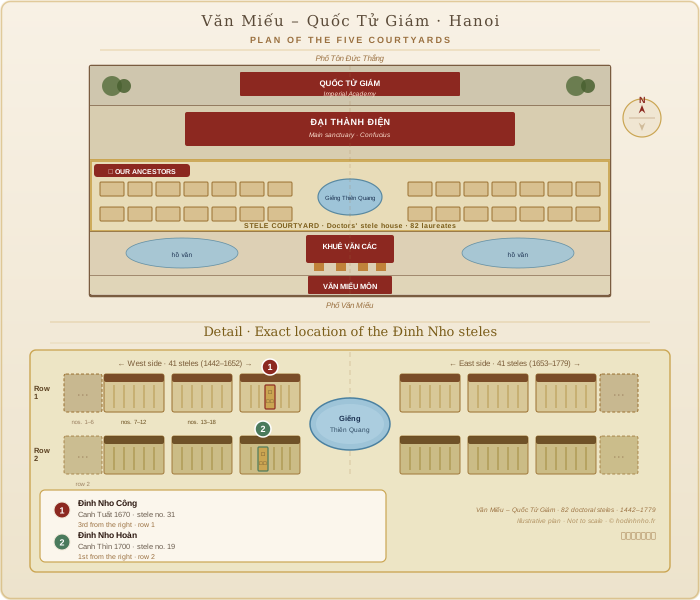
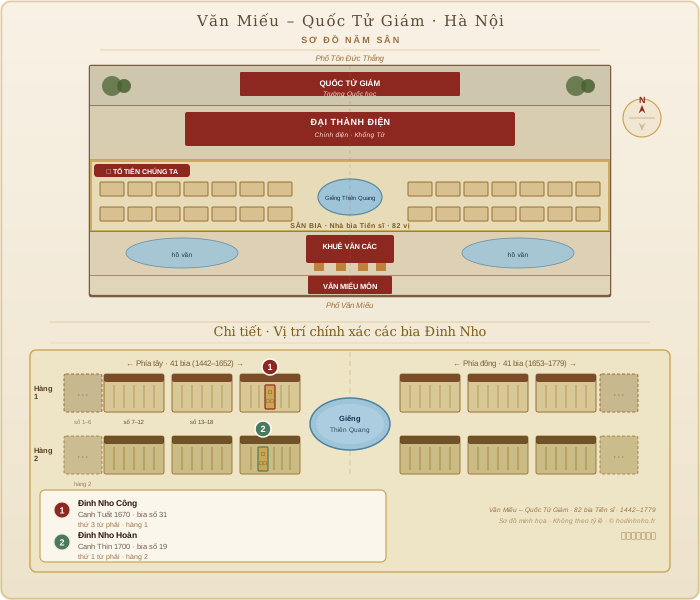
Đinh Phúc Diên was a refugee clearing unknown land. Đinh Nho Hoàn died alone in a foreign city. Đinh Nho Điển was forty years old and died defeated. Đinh Nhật Thận composed his lament through hardship, without a guaranteed readership. What they had in common was not talent or luck. It was the commitment to give their best in the circumstances that were theirs — no more, no less.
The Đinh Nho lineage does not ask its descendants to be extraordinary. It asks them to be whole.
Le giỗ, pas à pasThe giỗ, step by stepLễ giỗ, từng bước một
Le giỗ — l'anniversaire de la mort d'un ancêtre — est le rite le plus vivant de la lignée : ni triste, ni figé. Voici comment il se déroule, de la veille au soir du repas.The giỗ — the anniversary of an ancestor’s death — is the most alive of the lineage’s rites: neither sad nor frozen. Here is how it unfolds, from the day before to the evening meal.Ngày giỗ là nghi lễ sống động nhất của dòng họ: không buồn bã, không cứng nhắc. Đây là trình tự của một ngày giỗ, từ hôm trước đến bữa cỗ.
- 潔La veille : la préparationThe day before: preparationHôm trước: chuẩn bị
On nettoie l'autel des ancêtres (bàn thờ), on astique les brûle-parfums, et l'on prépare le mâm cỗ — le plateau d'offrandes : les mets que le défunt aimait, du riz, du thé, de l'alcool de riz, des fruits et des fleurs.The ancestors' altar (bàn thờ) is cleaned, the incense burners polished, and the mâm cỗ — the offering tray — is prepared: the dishes the departed loved, rice, tea, rice wine, fruit and flowers.Lau dọn bàn thờ tổ tiên, đánh bóng lư hương, và chuẩn bị mâm cỗ: những món người đã khuất yêu thích, cơm, trà, rượu, hoa quả.
- 香L'invitationThe invitationLời khấn mời
Le jour venu, l'aîné de la branche (trưởng tộc) allume l'encens — toujours un nombre impair de bâtonnets — et prononce le văn khấn : l'invocation qui invite l'ancêtre, et ses compagnons de génération, à revenir partager le repas.On the day itself, the senior of the branch (trưởng tộc) lights the incense — always an odd number of sticks — and recites the văn khấn: the invocation inviting the ancestor, and the companions of their generation, to come back and share the meal.Đến ngày giỗ, trưởng tộc thắp hương — bao giờ cũng là số lẻ nén — và đọc văn khấn: lời mời tổ tiên cùng các vị đồng thế hệ về hưởng lễ.
- 拜Les prosternationsThe bowsLễ bái
Chacun, par ordre de génération puis d'âge, s'incline ou se prosterne (lạy) devant l'autel : on salue, on donne des nouvelles de la famille, on demande la protection pour l'année qui vient.Each person, in order of generation then of age, bows or prostrates (lạy) before the altar: one greets, gives news of the family, and asks for protection for the year to come.Từng người, theo thứ tự thế hệ rồi tuổi tác, vái hoặc lạy trước bàn thờ: chào hỏi, thưa chuyện gia đình, cầu xin phù hộ cho năm tới.
- 食Le repas partagéThe shared mealThụ lộc
Quand l'encens s'est consumé, les offrandes redeviennent nourriture : la famille mange ensemble — c'est le thụ lộc, « recevoir la grâce ». Le repas est joyeux : un giỗ n'est pas un deuil, c'est une retrouvaille.When the incense has burned down, the offerings become food again: the family eats together — this is thụ lộc, "receiving the blessing". The meal is joyful: a giỗ is not a mourning, it is a reunion.Khi hương tàn, lễ vật trở lại thành cỗ: cả nhà cùng ăn — đó là thụ lộc. Bữa cỗ vui vẻ: ngày giỗ không phải là ngày tang, mà là ngày đoàn tụ.
- 傳La transmissionThe passing onTruyền lại
Autour de la table, on raconte : qui était l'ancêtre, ce qu'il a fait, ce que la famille lui doit. C'est là que la généalogie devient vivante — chaque giỗ est une leçon d'histoire familiale.Around the table, stories are told: who the ancestor was, what they did, what the family owes them. This is where the genealogy comes alive — every giỗ is a lesson in family history.Quanh mâm cỗ, mọi người kể chuyện: tổ tiên là ai, đã làm gì, gia đình chịu ơn gì. Chính lúc đó gia phả trở nên sống động — mỗi ngày giỗ là một bài học về lịch sử gia đình.
🕯️ Les dates de tous les giỗ de la lignée sont dans l’agenda ; la cérémonie au temple de Gôi Vỵ est à voir dans les médias.The dates of all the lineage’s giỗ are in the calendar; the ceremony at the Gôi Vỵ temple can be watched in the media section.Ngày giỗ của cả dòng họ có trong lịch giỗ; lễ tế tại đền Gôi Vỵ xem tại trang phim ảnh.
The Living Temple
At Đồng Vực hamlet or at the Gôi Vỵ sanctuary, we do not celebrate ghosts. We maintain an unbroken dialogue with all the dead — the illustrious and the silent, those whose names are on the stelae and those whose names have been forgotten. They are our invisible roots, and we are their branches reaching toward the future.
Whatever country we live in, whatever language we dream in, whatever work we do. As long as we make curiosity our compass, integrity our way of being each day, remembrance our way of loving those who came before us — and as long as each of us, in our own measure, has given their best — the soul of the Đinh Nho lineage will endure.
And the beginning of those of tomorrow.