Đinh Nhật Thận
1815–1866 ⚠︎ · doctor (1838), poet · 11th generation
Great-grandson of Đinh Nho Côn, born at Thanh Liêu (Thanh Chương, Nghệ An). Courtesy name Tử Úy, or Tử Quý according to an article reproduced by ĐTA 2023 ⚠︎ (D-T26); literary name Bạch Mao Am. Received as doctor at the examination of the Mậu Tuất year (1838), he was appointed prefect, then dismissed; he later declined reinstatement ⚠︎ (D-H20). A friend of Cao Bá Quát, he was arrested after the revolt of 1854 and taken to Huế; there he wrote the Thu dạ lữ hoài ngâm. The accounts of his release diverge ⚠︎ (D-H21).
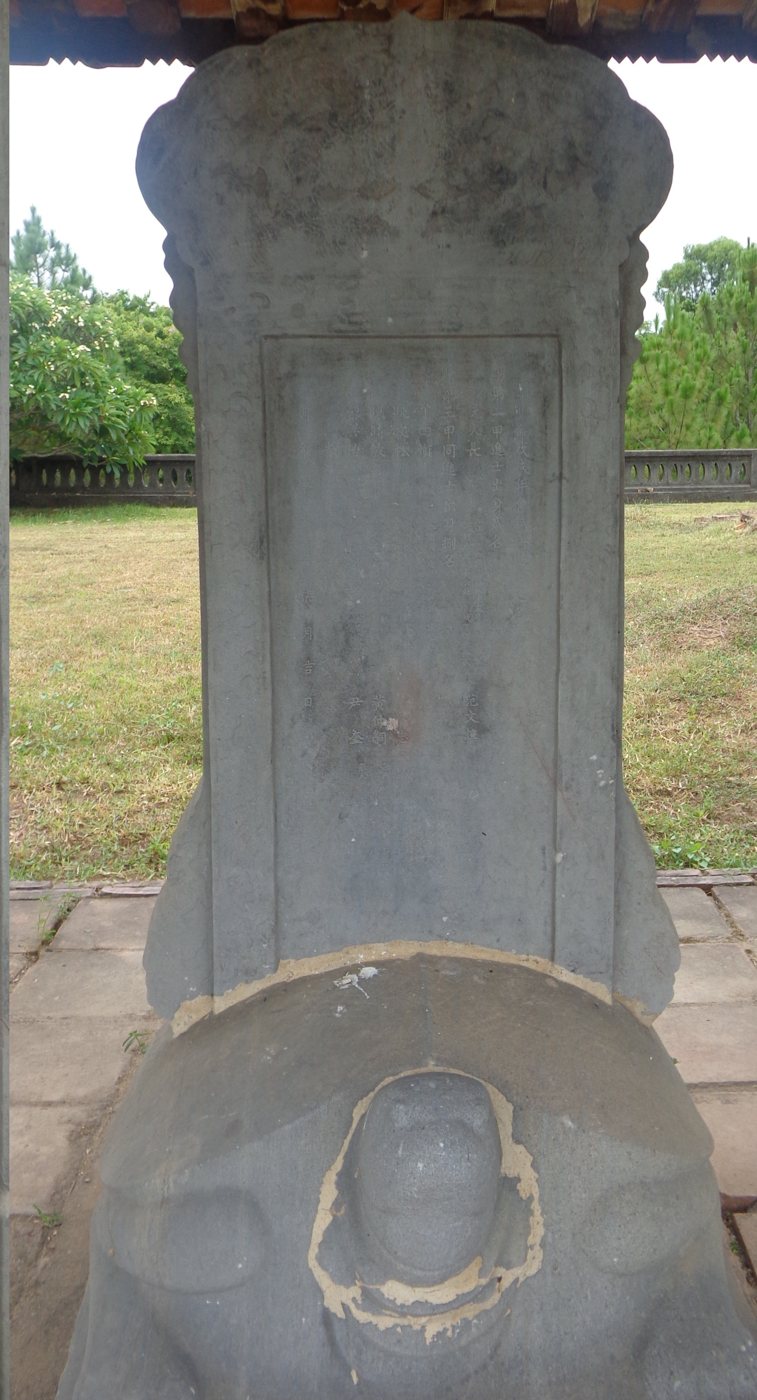
Back in his home region, he taught until his death. According to an article by Hồ Hữu Phước reproduced by GP2020, Đặng Thai Mai counted the Thu dạ lữ hoài ngâm among the four finest laments of classical literature. His name appears on the doctors' stele of the 1838 examination, at the Văn Miếu of Huế.
Key facts
- Birth
- 1815, Thanh Liêu (Thanh Chương)
- Death
- 1866 (1886 according to a 2010 article ⚠︎), at Thanh Liêu; 51 full years of age
- Generation
- 11 (Thanh Liên branch)
Sources
- Wikipedia, “Đinh Nhật Thận”
- GP2020 [đời 8; Phần A; Phần D § 6]
- ĐTA 2023 [p. 12, 87, 139–140]
- D-H20, D-H21, D-H22, D-H23; D-T26